Barcode, QR Code and Data Matrix Reading: A Simple Guide for Manufacturing and Logistics

Matt Wilton
Director

Table of contents
Share
A code does not need a long explanation.
It needs to be read.
On a carton, pouch, bottle, parcel, pallet, tray, label or component, the job is simple: identify the item correctly and send that information where it needs to go.
That might be a warehouse system, production database, PLC, HMI, reject station, sorter, dispatch record or operator screen.
Barcode, QR code and Data Matrix reading is one of the most practical ways to reduce manual checks, speed up handling and improve confidence in what is moving through a line, warehouse or factory.
The important part is choosing the right reader style, read distance, focus option and communication method for the job.
What does an industrial code reader do?
An industrial code reader captures a code, decodes the information and sends the result to another system.
That is the ABC of it.
The reader may be fixed above a conveyor. It may be handheld by an operator. It may scan a single label at a workstation or read items moving through a logistics network at speed.
Once the code is read, the system can use it to:
identify a product
confirm a carton or case
update inventory
route a parcel or tote
check the correct item is present
link an item to a batch or order
trigger a reject or alert
record the movement of goods through a process
The code is the bridge between the physical item and the information behind it.
1D barcodes, QR codes and Data Matrix codes
Most industrial code reading falls into two main families: 1D and 2D.
1D barcodes
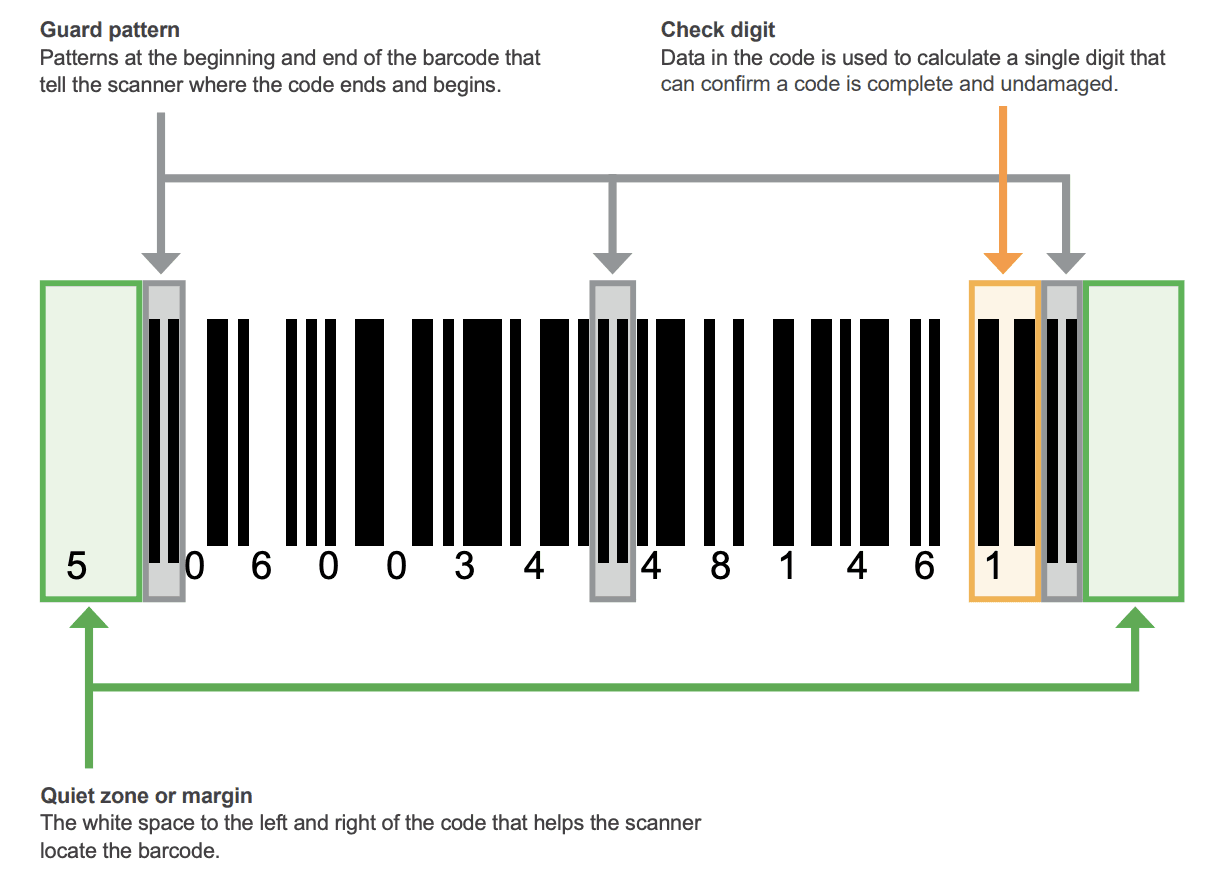
A 1D barcode is the familiar set of vertical lines found on retail products, cartons, labels and packaging.
It is usually read from left to right and is commonly used for product identification, stock control, logistics handling and point-of-sale applications.
Typical uses include:
product labels
outer cartons
retail packaging
warehouse stock
shipping labels
case and pallet identification
QR codes
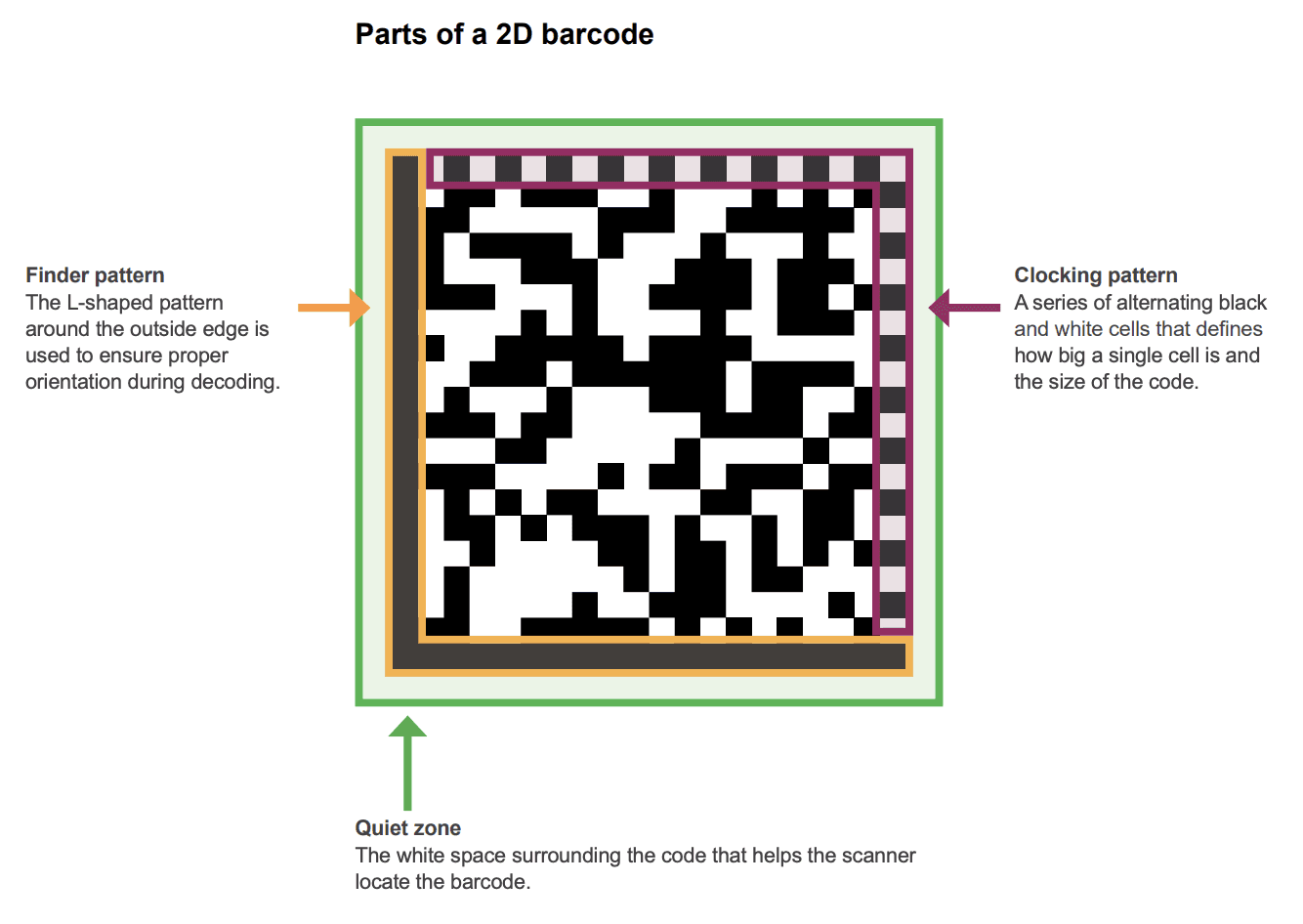
A QR code is a 2D code. It stores data across a square pattern rather than in a single line.
QR codes are common where more information needs to be carried in a small space, or where a code may need to link to digital information.
In industrial environments, QR codes may be used for packaging, asset tracking, product information, maintenance records or workflow identification.
Data Matrix codes
Data Matrix codes are also 2D codes, and they are particularly useful in manufacturing because they can be compact and robust.
They are often used where space is limited, such as small components, medical devices, electronics, aerospace parts and direct part marking.
A Data Matrix code can carry useful identification data in a very small area. That makes it a good fit for parts that need to be tracked beyond the packaging stage.
Handheld or fixed-mount reader?
There are two common ways to approach industrial code reading: handheld and fixed-mount.
Both have their place.
Handheld code readers
Handheld readers are useful when an operator needs flexibility.
They are well suited to:
goods-in checks
warehouse stock checks
manual pick and pack
awkward or oversized parts
isolated scan points
maintenance and asset checks
backup scanning where an automated read fails
low-volume or mixed-product operations
A handheld reader is often the easiest route when the operator needs to bring the scanner to the item rather than move the item past a fixed scanner.
For logistics, maintenance, stores and production support, a rugged handheld reader can be a very practical tool.

Fixed-mount code readers
Fixed-mount readers are used when the process needs automated, hands-free reading.
They are suited to:
conveyors
packaging lines
carton handling
product transfer points
sorter induction
pallet scanning
automated workstations
production cells
dispatch checks
reject stations
A fixed reader is positioned at the point where the code needs to be captured. The product passes through the read zone, the code is decoded, and the result is sent to the control or data system.
For high-throughput production and logistics, fixed-mount readers are usually the better option.
Static, moving and high-speed code reading
A code can be read while the item is stationary or moving.
Static code reading
Static reading is used when the item is held still, presented manually or placed in a known position.
Examples include:
manual workstations
inspection benches
kitting stations
component checks
goods-in counters
sample verification
small batch operations
Static reading is usually straightforward because the code position, distance and movement are easier to control.
Dynamic code reading
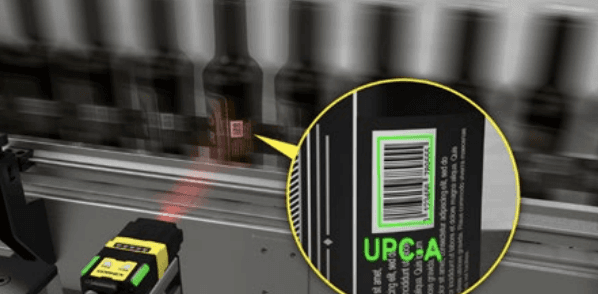
Dynamic reading is used when products move past the reader.
Examples include:
cartons on conveyors
pouches on packaging lines
bottles on filling lines
parcels on sorters
totes in warehouse automation
trays moving through production
cases entering dispatch areas
Dynamic reading is where dedicated industrial readers earn their keep. They are built to capture codes quickly, deal with movement and pass the result on without slowing the line.
High-speed reading
High-speed code reading is used where products move quickly and there is very little time to capture the code.
Typical examples include:
food and beverage packaging
pharmaceutical packaging
parcel sortation
carton routing
automated warehouse conveyors
manufacturing lines with short cycle times
The reader choice depends on line speed, code size, distance, field of view, product spacing and how the code is presented.
The goal is simple: read the code without asking the line to behave like a laboratory.
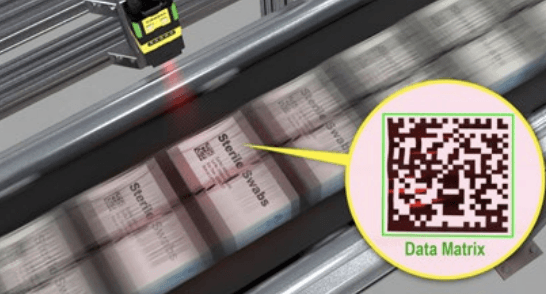
Modern code readers are built for imperfect codes
In the real world, codes are not always clean, flat and perfectly presented.
They may be:
tilted
blurred
scratched
partly covered
low contrast
printed on curved surfaces
marked directly onto metal or plastic
placed on reflective film
damaged during handling
printed on wrinkled packaging
moving at speed
shown at different distances from the reader
Modern industrial code readers are designed for these conditions.
Image-based readers capture the code area and use decoding algorithms to locate and read the code. This is especially useful for 2D codes, Data Matrix codes, direct part marks, damaged labels and codes that are not presented perfectly.
2D codes also have built-in error correction, which helps the reader recover data even when part of the code is damaged or obscured.
The point is not that a production line should tolerate bad labelling forever. The point is that a good reader gives the process more resilience.
Autofocus and liquid lens technology
Not every product appears at the same height or distance.
In logistics and manufacturing, that is normal.
A small pouch, tall carton, bottle, tray and parcel may all pass through a similar read point, but the code may sit at a different distance from the reader. Manually refocusing a reader every time the product changes is not a sensible way to run a busy line.
Autofocus and liquid lens technology help here.
In simple terms, the reader can adjust focus quickly between products or formats. That makes setup easier when the process includes different product sizes, varied working distances or shorter production runs.
This is one of the reasons industrial code readers can be much easier to deploy than people expect. The reader is built for practical factory and logistics use, not just perfect barcode samples on a desk.
Where code readers are used
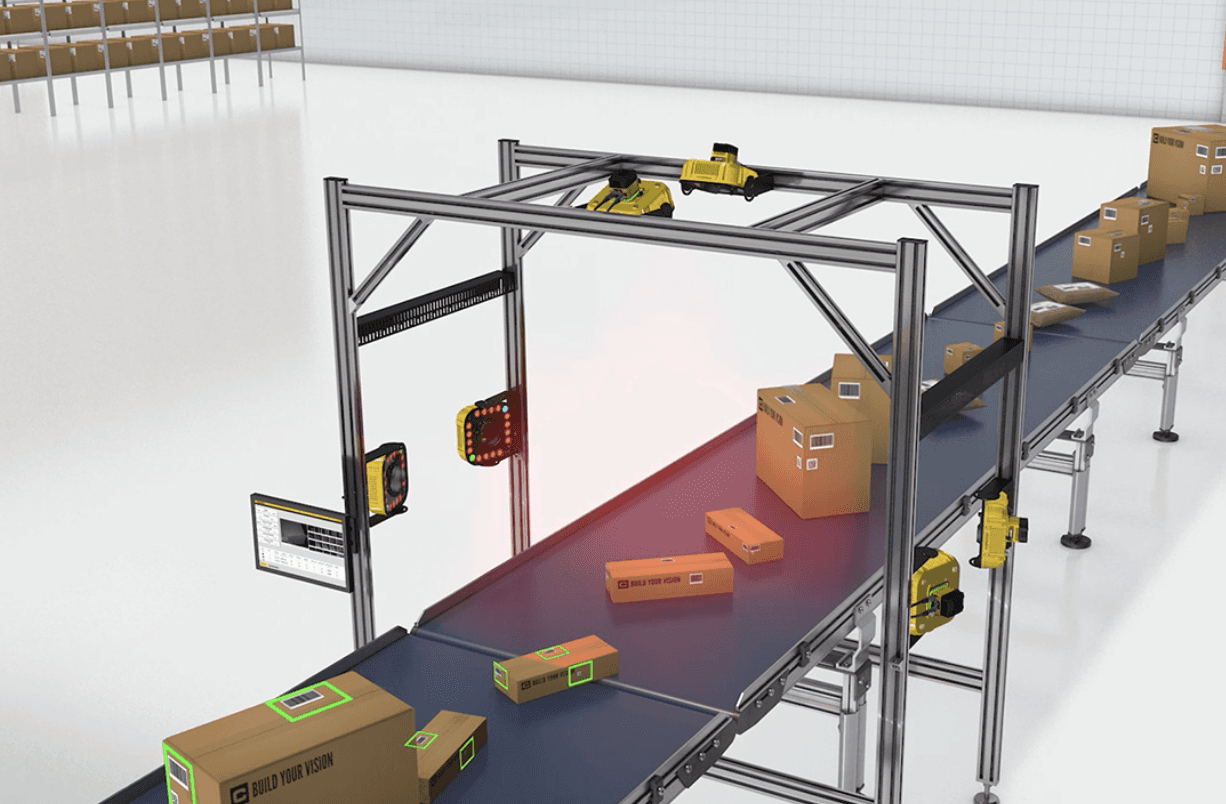
Logistics
Logistics is one of the clearest applications for industrial code reading.
Parcels, cartons, totes, trays, pallets and shipments need to be identified quickly as they move through a warehouse or distribution centre.
Common uses include:
inbound scanning
parcel identification
tote routing
pallet scanning
pick and pack confirmation
conveyor sortation
ship sorter induction
dispatch checks
return handling
A single reader may be used at a simple scan point. A larger logistics operation may need multiple readers across conveyor zones, merges, diverts, sorters and dispatch lanes.
This is where the project becomes less about one reader and more about the flow of goods through the building.
Food and beverage
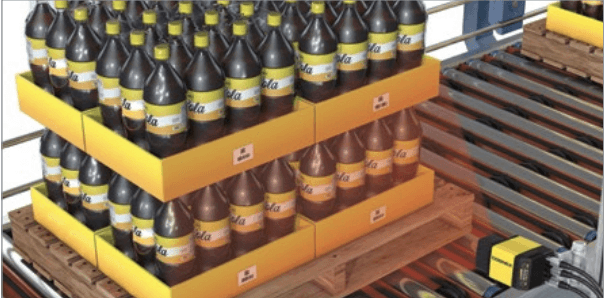
Food and beverage lines often use codes on products, packs, cases and cartons.
Code readers can help with:
product identification
carton and case reading
mixed-product prevention
batch movement
packaging flow
automated sorting
pallet and dispatch checks
Products may move quickly, packaging may be glossy or curved, and codes may appear on different sides of a carton or label. A properly selected reader helps keep identification aligned with the speed of the line.
Pharma
Pharma applications often need reliable code reading across cartons, labels, pouches, vials, bottles, trays and secondary packaging for a range of code types including pharmacode.
Common requirements include:
pack identification
serialised product handling
batch and lot linkage
expiry data linkage
label and carton movement
reject handling
production records
The code reader is only one part of the process, but it plays a key role in making sure the right item is identified at the right stage.
For regulated or validation-led environments, the wider system design, data handling and change control requirements should be defined clearly from the start.
Aerospace and defence
Aerospace and defence applications often involve parts and components that need to be identified throughout their lifecycle.
Code reading may support:
direct part mark reading
component identification
part history
supplier quality
assembly checks
controlled documentation
stores and kitting
maintenance and repair workflows
Data Matrix codes are common in these kinds of applications because they can be compact and durable when marked directly onto a part.
The key challenge is often not the code format. It is the surface, mark quality, access angle and how the scan result connects to the wider quality or maintenance record.
Code reading versus OCR and OCV
Code reading is not the same as OCR or OCV.
A barcode, QR code or Data Matrix code is machine-readable. It is designed for a reader.
OCR and OCV deal with human-readable characters, such as printed expiry dates, batch numbers, serial numbers and text.
In many applications, both are used together.
For example, a pharmaceutical carton may have a Data Matrix code, a batch number and an expiry date. A food package may have a retail barcode and a printed date code. A component may carry a Data Matrix mark and human-readable text beside it.
The right system depends on what needs to be read and what needs to be checked.
What happens after the code is read?
Reading the code is the first step.
The real value comes from what happens next.
The system may:
update inventory
confirm a product variant
route a tote
divert a parcel
reject the wrong item
confirm the correct part is present
record when an item passed a station
link a product to a batch, order or shipment
update a warehouse, ERP or production system
give the operator a clear pass/fail or read/no-read result
This is where code reading supports traceability without making the subject more complicated than it needs to be.
Traceability simply means connecting the item to the right information.
In logistics, that may be a shipment, parcel, tote, route or delivery record.
In food and beverage, it may be a batch, case, product type or dispatch record.
In pharma, it may be a serial, batch, pack or production record.
In aerospace and defence, it may be a part number, component history or controlled quality record.
When one reader becomes a reader network
One code reader on one line is usually simple.
A wider logistics or factory application can involve many readers working together.
For example:
inbound cartons are scanned at goods-in
totes are read before routing
parcels are read at conveyor merges
cases are checked before palletising
pallets are scanned before dispatch
no-reads are diverted for manual handling
scan data is passed into a warehouse or production system
In these applications, the individual readers may still be easy to use. The important work is making sure the read points are in the right places, the data goes where it should, and no-read handling is practical.
This is where local support becomes useful. Not because code reading is mysterious. Because a real logistics or production environment has movement, operators, downtime pressures and systems that need to talk to each other.
How AIET helps
AIET Group supports manufacturing and logistics teams with industrial code reading solutions for static, moving and high-speed applications.
The work starts with a few practical questions:
What code needs to be read?
Where is it located?
Is the item stationary or moving?
Is the reader handheld or fixed?
How far is the code from the reader?
Does the product size change?
Is the code printed, labelled or directly marked?
What should happen after a successful read?
What should happen after a no-read?
Does the data need to go to a PLC, HMI, workstation, database, warehouse system or production system?
For many applications, the answer is straightforward: select the right reader, mount it correctly, set the read zone and connect the result.
For larger logistics or production environments, AIET can support the wider setup around multiple readers, conveyor points, routing decisions, no-read handling and data flow.
The aim is simple: reliable code reading without making the system harder than it needs to be.
FAQ
What is the difference between a barcode, QR code and Data Matrix code?
A barcode is usually a 1D code made from vertical lines. QR codes and Data Matrix codes are 2D codes that store data in a square pattern. Data Matrix codes are often used in industrial applications where space is limited or direct part marking is required.
Can industrial code readers read products while they are moving?
Yes. Fixed-mount industrial code readers are commonly used on moving conveyors, packaging lines, sorters and automated handling systems.
What is the difference between a handheld scanner and a fixed-mount reader?
A handheld scanner is used manually by an operator. A fixed-mount reader is installed in a set position and reads codes automatically as products, cartons, parcels or parts pass through the read zone.
Can code readers handle damaged or poorly printed codes?
Modern image-based readers are designed to handle many real-world code problems, including low contrast, partial damage, blur, distortion, curved surfaces and direct part marks. The final result still depends on the code, surface, speed and read setup.
What is a no-read?
A no-read happens when the reader cannot decode the code. Common causes include poor print quality, damage, glare, incorrect distance, motion blur, poor placement or the item passing outside the read zone.
What is liquid lens autofocus?
Liquid lens autofocus allows the reader to adjust focus quickly when products appear at different distances. This is useful when a line handles varied product sizes, cartons, pouches, trays or parcels.
Can one reader read multiple codes?
Yes, in some applications. High-resolution image-based readers can read multiple codes in one view, depending on field of view, code size, distance and setup.
Is code reading the same as OCR?
No. Code reading deals with machine-readable codes such as barcodes, QR codes and Data Matrix codes. OCR reads human-readable characters such as dates, batch numbers and serial numbers.
Which industries use industrial code readers?
Common sectors include logistics, food and beverage, pharma, aerospace, defence, packaging, electronics, manufacturing and warehouse automation.
Speak to AIET Group
Speak to AIET Group if you are reviewing barcode, QR code or Data Matrix reading for a manufacturing, packaging, logistics, pharma, food and beverage, aerospace or defence application.
We can help select and support the right industrial code reader for static, moving or high-speed applications, from a single scan point to wider conveyor and warehouse networks.