How AI is Transforming Manufacturing Quality by 2030: Smarter, Safer, More Reliable

Nemi Douglas
Sales & Marketing
Table of contents
Share
How AI Will Reshape Quality Assurance by 2030. Introduction: From Reaction to Anticipation
Manufacturing quality is changing. What was once a reactive process, built around inspection and correction, is becoming predictive and adaptive. Artificial intelligence is playing a key part in that shift — not by replacing engineers, but by learning from them.
We’ve found that manufacturers who use AI to support their quality systems gain something subtle yet powerful: the ability to anticipate problems before they occur. As data becomes richer and machines become smarter at interpreting it, quality assurance is moving from a department into a culture.
AI in Quality: Quietly Transforming, Not Taking Over
The phrase “AI in manufacturing” often conjures images of fully autonomous factories. In reality, the change is quieter and more practical. AI is being built into the tools and processes that already exist, helping them make faster and more consistent decisions.
In quality control, AI is improving three main areas:
Inspection accuracy – recognising complex defects that rule-based systems might miss.
Process learning – analysing thousands of production variables to identify the true root causes of faults.
Predictive maintenance – using data to foresee when machines are drifting out of specification.
These systems do not replace engineers; they extend their reach. AI provides context, speed, and memory that humans alone cannot maintain at scale.
The Power of Real-Time Data
Modern factories generate more data than ever: sensor readings, temperature logs, vision images, machine vibrations, and operator inputs. Yet most of it goes unused.
AI changes that by finding relationships hidden within those data streams. For example, a subtle vibration pattern in a press might correlate with future surface defects. By learning that pattern, an AI model can alert teams before any defect appears.
When combined with inline metrology or vision systems, this becomes a closed feedback loop — measurement identifies deviation, AI interprets the trend, and the process adjusts automatically. The result is consistent output with less intervention and waste.
How AI Enhances Vision and Metrology
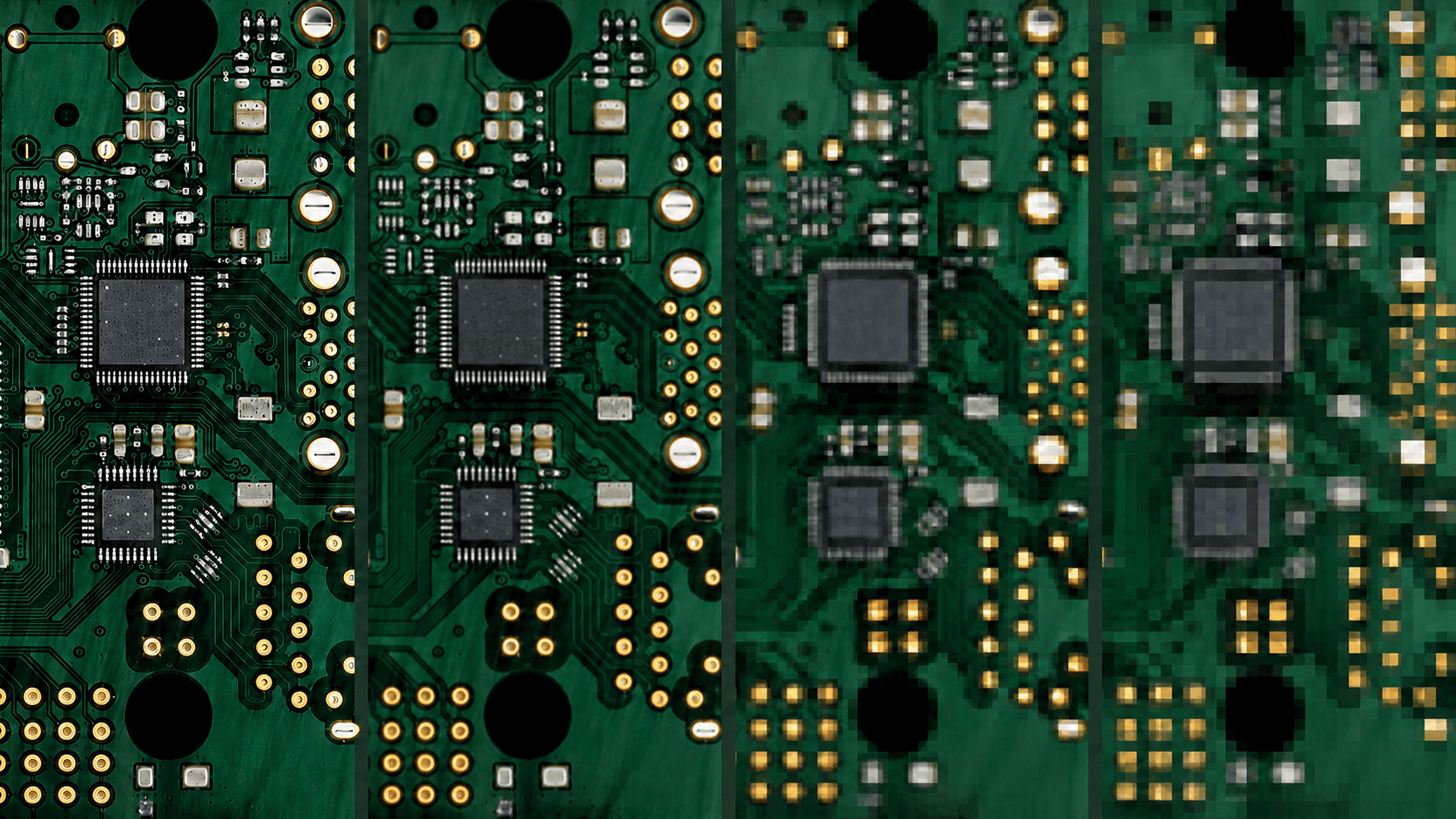
AI-driven vision systems are now capable of analysing complex surfaces, reflective materials, and composite parts that once challenged traditional inspection. By training on thousands of examples, these systems learn what “normal” looks like and flag the slightest deviation.
In metrology, AI can help interpret 3D data faster and detect patterns across large production runs. Instead of analysing a single measurement, it evaluates trends across shifts, materials, and environmental conditions. This helps engineers focus on improvement rather than chasing symptoms.
We’ve seen that when AI is combined with proven vision and measurement tools, the improvement is exponential. It turns inspection data into process intelligence.
Trust and Transparency Still Matter
The adoption of AI in quality assurance is not only about technology; it’s about trust. Manufacturers must understand how decisions are made and ensure that systems remain transparent.
That means:
Keeping humans in the loop for final judgment calls.
Using AI as a tool for clarity, not control.
Maintaining clear documentation for audits and certification.
AI is most valuable when it supports human reasoning, not when it replaces it. The best results come from balanced systems where people and algorithms complement each other.
Preparing for 2030: Building the Right Foundation
By 2030, most manufacturers will have some form of AI integrated into their quality operations, whether they realise it or not. The companies that benefit most will be those that prepare early by:
Digitising their processes so data can be captured reliably.
Upgrading inspection tools to generate high-quality, structured data.
Training teams to interpret AI insights confidently and responsibly.
The goal is not to automate everything, but to make decisions more informed and responsive.
AI in the GCC and Middle East Context
In the Middle East, especially in the UAE and Saudi Arabia, there is a strong push to develop local manufacturing ecosystems built on precision, traceability, and sustainability. AI-supported quality systems fit naturally into that vision.
Factories adopting advanced inspection, metrology, and predictive tools now will set the benchmark for regional and export quality standards in the next decade.
By integrating AI into their existing quality systems, these manufacturers can compete globally without outsourcing intelligence or innovation.
Conclusion: Smarter Systems, Human Expertise
AI will not remove people from quality assurance; it will make their expertise go further. The future of quality is about insight, not automation.
As systems learn to interpret data, predict outcomes, and self-correct, quality management will shift from a checkpoint to a continuous conversation between machines and humans.
If your organisation is exploring how AI and modern inspection systems can improve accuracy, traceability, and efficiency, contact us to arrange a consultation or learn more about how we can support your transition to smarter, data-driven quality assurance.