Made in Taiwan vs. Made in Emirates: Lessons in Building a Reputation for Quality

Nemi Douglas
Sales & Marketing
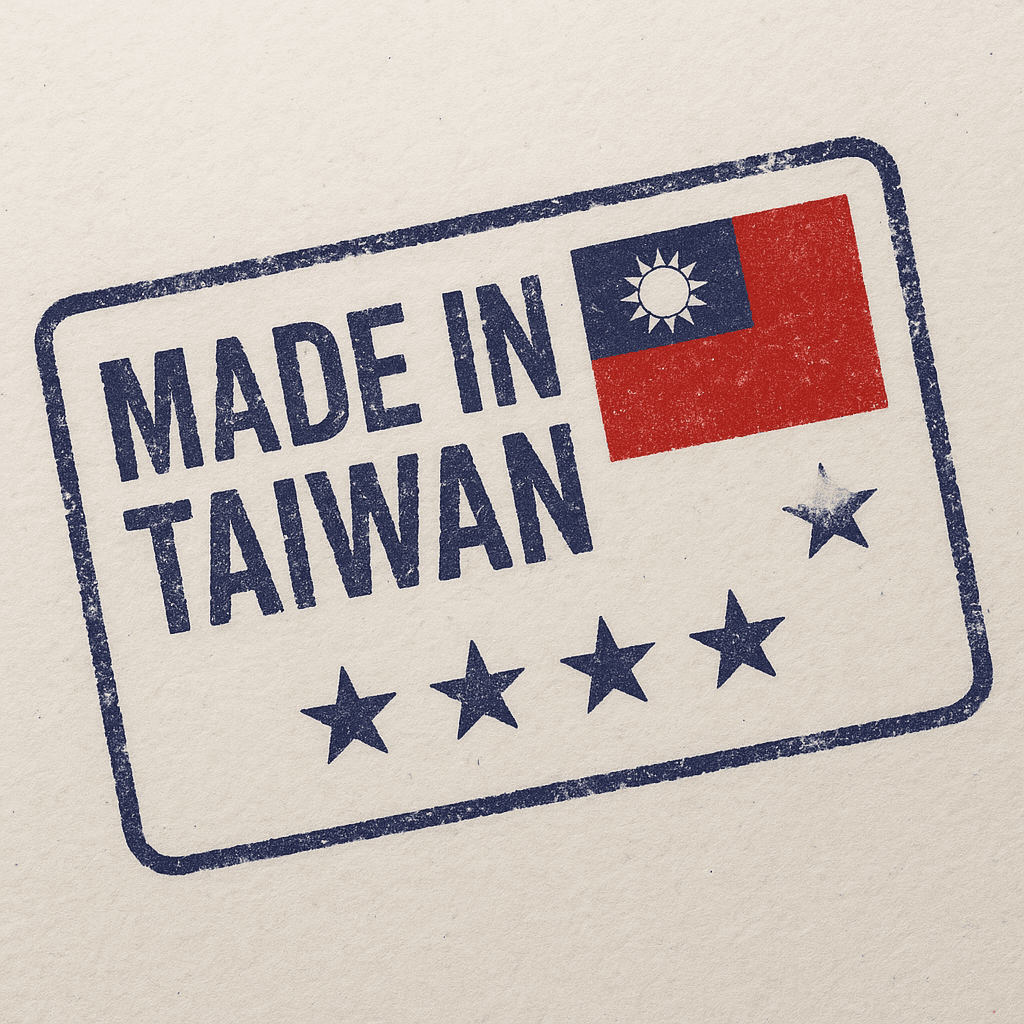
Table of contents
Share
Introduction: What a Label Really Means
Every nation’s manufacturing story is written on its products. “Made in Japan” became a mark of precision. “Made in Germany” still signals engineering excellence. “Made in Taiwan,” however, had to earn its credibility the hard way.
In the 1980s and 1990s, Taiwan was known for affordable exports: fast, functional, and often disposable. Over time, that image changed. Today, Taiwan leads in advanced electronics and semiconductor production. Its transformation offers a valuable lesson for any nation seeking to build a lasting industrial identity.
As the UAE and wider GCC push forward with ambitious manufacturing strategies, the challenge is not only to produce more, but to produce with trust. The phrase “Made in Emirates” must come to mean something measurable, consistent, and globally respected.
Learning from Taiwan’s First Chapter
Taiwan’s early success was built on volume and cost competitiveness, sometimes at the expense of consistency. Global buyers initially rewarded low prices more than precision. But as markets matured and expectations rose, Taiwanese manufacturers faced a decision: remain low-cost suppliers or evolve into partners in innovation.
They chose reinvention. With targeted government support, strong links between universities and industry, and serious investment in process control, Taiwan shifted its identity from imitation to innovation. The world’s perception changed because the products did.
Why This Lesson Matters for the Emirates
The UAE’s manufacturing story is still being written, but its ambitions are clear: diversify beyond oil, build advanced industries, and lead in digital transformation. Operation 300bn provides the framework, but reputation depends on execution, not strategy documents.
Industrial credibility isn’t built in export volumes; it’s built in inspection rooms. Every product that leaves a factory either reinforces or undermines trust. Manufacturers in the Emirates have a rare advantage—they can start with quality systems that others took decades to discover.
The New Definition of Quality
Quality today goes beyond meeting specifications. It includes traceability, sustainability, and consistent digital integration across every production stage. Global buyers no longer ask, “Can you make it?” They ask, “Can you prove it—every time?”
This is where metrology, vision systems, and AI-driven inspection become essential. Inline measurement and automated visual checks ensure every component meets standard before it leaves the line. When combined with real-time data analytics, these systems create a digital record of compliance, a verifiable proof of reliability.
Manufacturers that embrace these tools early won’t just improve yield; they will shape what “Made in Emirates” means to the world.
Building Trust Through Measurement and Integration
Nations that built manufacturing credibility—Japan, Germany, South Korea—did it through consistency, not marketing campaigns. The same principle applies to the Emirates. Trust grows when every product leaves a traceable digital footprint that confirms it meets the standard.
Integrating machine vision, lighting design, and precision metrology creates self-correcting systems where quality becomes routine. But the shift is as much cultural as technical. A factory that measures everything learns faster and performs better.
From Policy to Practice
For policymakers, the goal is to make quality the default through incentives for technology adoption, collaboration between research and industry, and unified data standards across sectors.
For manufacturers, inspection should be seen not as a cost, but as a strategic asset. Vision systems, lighting, and metrology tools reduce waste, strengthen repeatability, and provide hard evidence of quality. UAE firms such as Strata and Emirates Global Aluminium already demonstrate how integrating digital monitoring builds credibility far beyond the region.
When inspection strategy aligns with production goals, the benefits extend beyond compliance. They build confidence—within the factory and across global markets.
Conclusion: Building the Future Reputation
“Made in Emirates” can become a global mark of reliability, but reputation is earned product by product. Taiwan’s journey shows that credibility follows quality, and quality follows accountability.
The UAE has the infrastructure, the ambition, and the opportunity to define its industrial character from the start. The proof will come not from slogans, but from data—from every product that meets its standard, every process that can be verified, and every client that returns because they trust the label.